How to Make Money with SEO Without Showing Your Face: A Practical Guide
Why You Don't Need to Be on Camera to Build a Real Online Income
For years, the loudest voices in online business have told you that success requires a personal brand. You have to film yourself, appear on podcasts, and post daily on social media. But that advice ignores a quieter, more sustainable path. You can make money with SEO without showing your face at all. It is not a new idea, but it has become far more accessible in the last few years, especially for people who prefer to work behind a keyboard rather than a camera.
The core of this approach is simple: build niche websites that attract organic traffic from search engines, then earn revenue through affiliate marketing, ad networks, or digital products. You never need to appear in a video or share your name beyond a standard "About" page. Google does not care who you are. It only cares whether your content answers a searcher's question better than the competition.
How Affiliate Marketing Fits Into a No-Face Strategy
Affiliate marketing is the backbone of this model. You promote other people's products through your site and earn a commission on sales or leads. The beauty is that you do not need to create, ship, or support anything. Your job is to write helpful content that guides a reader toward a purchase decision they were already considering.
Programs like Amazon Associates and ClickBank cover nearly every product category you can imagine. Amazon Associates works well for physical products, especially if you focus on things you already use or understand. ClickBank is better for digital products, courses, and software, where commissions are often higher. Both let you earn passive income from content you wrote months ago, as long as it keeps ranking.
The trick is to match the right product with the right audience. If you build a site around a specific hobby, like indoor gardening, you can link to soil, lights, and seeds. If you build a site around a software tool, you can link to that tool's affiliate program. The more specific the niche, the easier it is to rank for low competition keywords.
SEO Is the Engine That Drives the Whole Thing
Without SEO, your site is invisible. And you do not need to be a technical wizard to do SEO well. The fundamentals have not changed much in a decade. You need keyword research to find what people are searching for, high-quality content that answers their questions, and some basic link building to signal trust to Google.

Keyword research is where most people waste time. They chase high-volume terms like "best laptop" that are dominated by huge sites. A smarter move is to target long-tail phrases that show clear intent. For example, "best LED grow lights for small apartments" might only get 200 searches a month, but the people searching it are ready to buy. That kind of traffic converts better than ten times the volume of informational queries.
Once you have a list of keywords, you write articles that genuinely help someone. Google's algorithms are good at detecting thin content. If you copy from the top result and reword it, you will not get far. Instead, add your own experience, test products if you can, or at least read real reviews and summarize what matters. Over time, that depth builds authority, and your pages climb the rankings.
AI Content Tools Can Speed Things Up, but Fine-Tuning Matters
I have seen a lot of people jump into this space thinking AI content tools will do all the work. They generate a 2000-word article in thirty seconds, paste it into a WordPress site, and wonder why it never ranks. The problem is that raw AI output lacks the specificity and voice that readers (and Google) reward. But used correctly, AI can help you research, outline, and draft faster.
The real value comes from fine-tuning. You take an AI draft and inject your own knowledge, add a personal anecdote, or include a comparison table that only someone familiar with the niche would write. That human touch makes the content feel real. It also reduces the risk of your site getting hit by a future algorithm update that penalizes generic AI content.
You can also use AI to brainstorm topic clusters. If you are building a site about "home canning," an AI tool can list related questions people ask. You then pick the ones that have low competition and write thorough answers. Over six to twelve months, that cluster of articles builds topical authority, and Google starts to trust your site as a resource for that subject.
The Tools You Actually Need (and the Ones You Don't)
You do not need a lot of software to start. A domain name, hosting, and WordPress are enough. WordPress is free, and most hosting plans cost a few dollars a month. For keyword research, you can start with Google's free tools. As you grow, paid tools like Ahrefs or Semrush help, but they are not mandatory for the first few sites.
For link building, focus on quality over quantity. A single link from a well-known site in your niche is worth more than a dozen low-quality directory links. You can get links by writing guest posts, creating resources that other sites want to cite, or simply reaching out to fellow site owners and offering something useful. Avoid buying links or using link farms. Google penalizes that aggressively.
Every few months, run a site audit to check for broken links, slow pages, or mobile issues. These small fixes improve user experience and can bump your rankings. A 0.2-second faster load time does not sound like much, but it can lift your organic traffic by a measurable percentage over a year.
Evergreen Niches and Passive Income: A Match Made for Privacy
Evergreen niches are topics people search for year after year. Home repair, personal finance, pet care, and health are classic examples. They do not trend up and down like fashion or news. If you build a site around an evergreen niche, your content can generate revenue for years with only occasional updates.
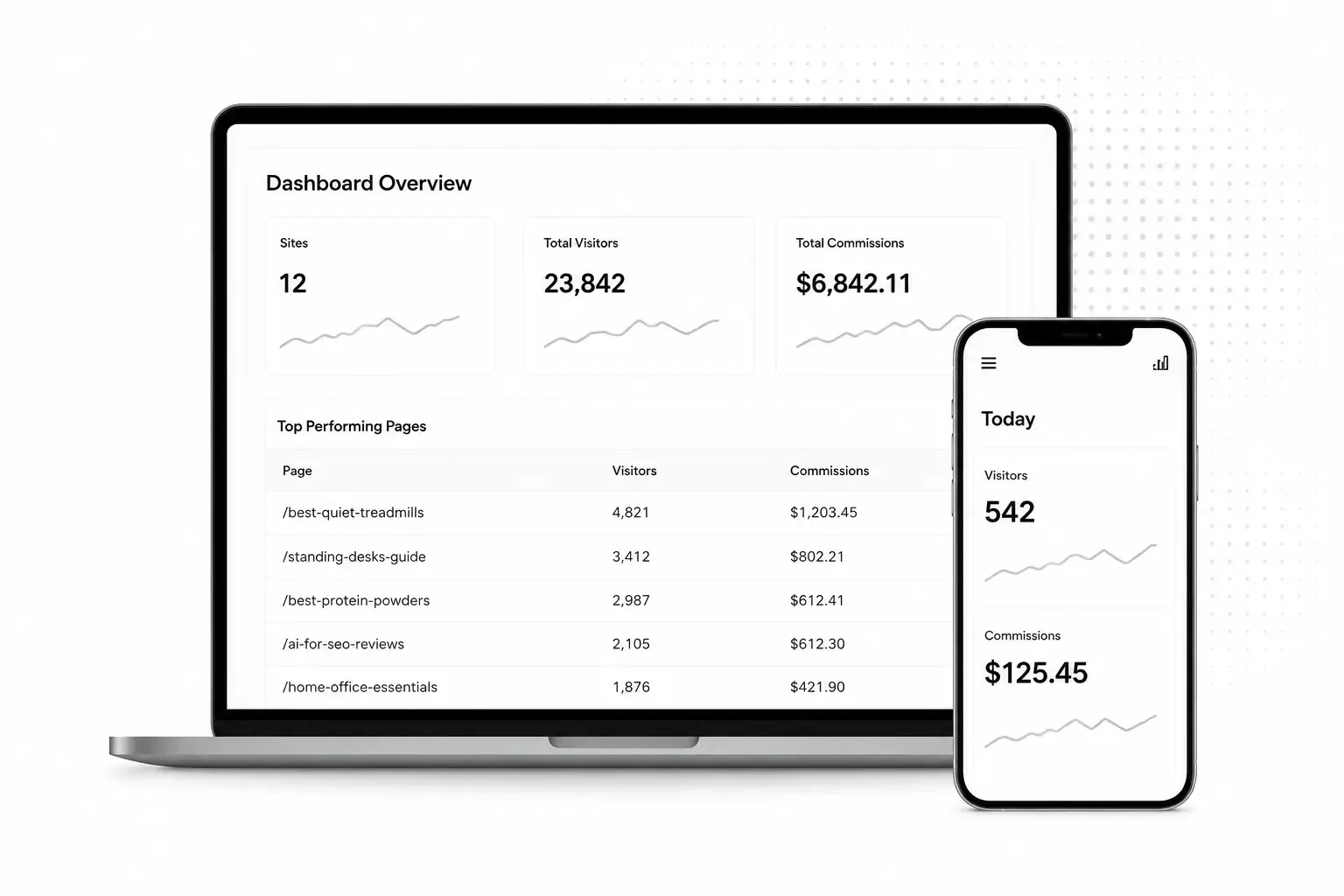
This is where the idea of passive income becomes real. You put in the work upfront: research, writing, and initial promotion. Then, for months or even years, the pages sit on page one of Google and send you traffic. You check your affiliate dashboard and see commissions arrive while you sleep. It is not truly passive, because you still need to maintain the site and occasionally refresh old articles. But it is far less active than most traditional side hustles.
And throughout all of it, you never have to show your face. You can use a pen name, a generic email, and a logo that does not feature a person. The internet is full of successful niche websites whose owners you have never heard of. That is by design. They make money with SEO without showing their face, and that anonymity lets them focus on what works rather than on building a personal brand.
Common Pitfalls to Avoid
The biggest mistake I see is picking a niche for the wrong reasons. Someone picks "best coffee makers" because they love coffee, but they do not research the competition. They write ten articles and get zero traffic because the niche is dominated by huge media sites. A better approach is to find a sub-niche within coffee, like "best espresso machines for small kitchens" or "coffee grinders for pour-over beginners." Those sub-niches have lower competition and more specific buyer intent.
Another common pitfall is giving up too early. SEO takes time. A new site rarely ranks well in the first three months. That is normal. If you keep publishing and building links, most sites start to see real organic traffic around month six to nine. The people who quit at month four never get to see the compound effect.

Finally, do not neglect the user experience. A site that loads slowly, has intrusive ads, or is hard to navigate will drive people away. Google notices when people click back to the search results quickly. That signals that your page is not satisfying the query. Keep your design clean, your content scannable, and your navigation simple.
Putting It All Together
If you want to make money with SEO without showing your face, the path is clear: pick an evergreen niche, do keyword research to find low competition terms, write high-quality content that serves the reader, and build a few good links over time. Use AI content tools to speed up your process, but always add your own knowledge to the final product. Sign up for affiliate programs like Amazon Associates or ClickBank that match your niche, and let organic traffic from Google deliver ready-to-buy visitors.
You do not need a camera, a podcast microphone, or a social media following. You need patience, a willingness to learn SEO basics, and the discipline to keep writing when no one is reading yet. That combination is rare, and that is precisely why it works. The people who stick with it often build sites that earn a full-time income from what started as a side project. And they do it without ever showing their face.